

Global Insights: Secondees at Hengeler
Interview with Philipp Pauschinger, New York
1 | Please briefly introduce yourself and describe your career path to date.
After completing my studies at the University of Heidelberg, in Hong Kong, and Berlin, I began working in the corporate department at Hengeler's Berlin office during my clerkship. That experience sparked my interest in corporate law, and I returned as an attorney in 2021. In January 2025, my family (including our newborn son) and I relocated to New York for my secondment at Hughes Hubbard & Reed.
2 | How did you come to start your secondment with Hughes Hubbard & Reed? Are there any specific reasons why you chose the firm?
Hughes Hubbard & Reed stood out for its reputation in corporate and M&A work, its small teams as well as its strong relationship with Hengeler. Hughes Hubbard & Reed and Hengeler have jointly advised clients on major cross border transactions, such as Knorr Bremse's acquisition of Alstom's conventional rail signalling technology business in North America. What also impressed me was the firm’s flexibility regarding timing. To align my secondment with the birth of our son and my wife’s maternity leave, I hoped to begin in January. This is outside the usual New York schedule, which typically starts in late summer with the intake of new associates. Hughes Hubbard & Reed accommodated this request seamlessly, which made the experience even more meaningful.
3 | Which areas of law do you mainly focus on during your secondment? Which tasks or projects did you particularly enjoy during your time abroad?
During my secondment, I primarily focused on cross-border M&A transactions, which allowed me to gain valuable insights into U.S. deal structures and negotiation dynamics. I worked on several transactions involving European clients investing in or divesting U.S. assets, which was a great opportunity to bridge different legal systems and business cultures.
One project that stands out was the sale of a mustard factory in Tennessee. Beyond the legal complexities – such as navigating regulatory requirements – it opened up a unique chance for me to connect with local authorities and people driving the business in the U.S. heartland, far from the usual coastal hubs.
4 | In your opinion, what are the most significant differences between the American and the German legal system? Were there any (unexpected) differences that particularly surprised you?
There are of course distinct differences between a German law-governed and a U.S. law-governed M&A transaction. However, I experienced two major differences. Probably the most significant and for me also the most unexpected difference was the negotiation style. In the U.S. it seems far more common and accepted to begin negotiations from an ideal position, even if that starting point is far removed from the other party’s expectations. In contrast, in Germany and generally across Europe negotiations tend to start from positions that are much more closely aligned. In addition, the work as a corporate attorney in the U.S. is significantly more business driven. During my year at Hughes Hubbard & Reed, I did not have to research a legal question once by looking at the case law or even legal articles or commentaries.
5 | How does the work at Hughes Hubbard & Reed differ from Hengeler? How is your team structured at Hughes Hubbard & Reed?
From my perspective, the work at Hughes Hubbard & Reed and Hengeler is quite similar. Both work with rather small teams. Even as a secondee, I was able to quickly take on responsibility and had close contact with the specialists. This provided me with a deeper understanding of the characteristics of US deals but also made the internal workflow quite frictionless. However, I also became aware of some differences. For example, I noticed the emphasis on responsiveness and proactive communication. Internally, I observed how collaboration often involves more frequent check-ins and communication.
6 | What did you take away from the secondment, professionally and personally? Did you gain any insights that you'll bring back to Hengeler?
I learned a great deal, both professionally and personally. Beyond gaining a deeper understanding of U.S.-style drafting, such as the heavy reliance on detailed representations and warranties, I also became familiar with concepts which are far less common in German transactions. Equally important, I developed a stronger appreciation for the work culture and expectations – both within the firm and from U.S. clients.
7 | What was your most memorable or unique moment during your time abroad? Is there a special place in New York that you have discovered?
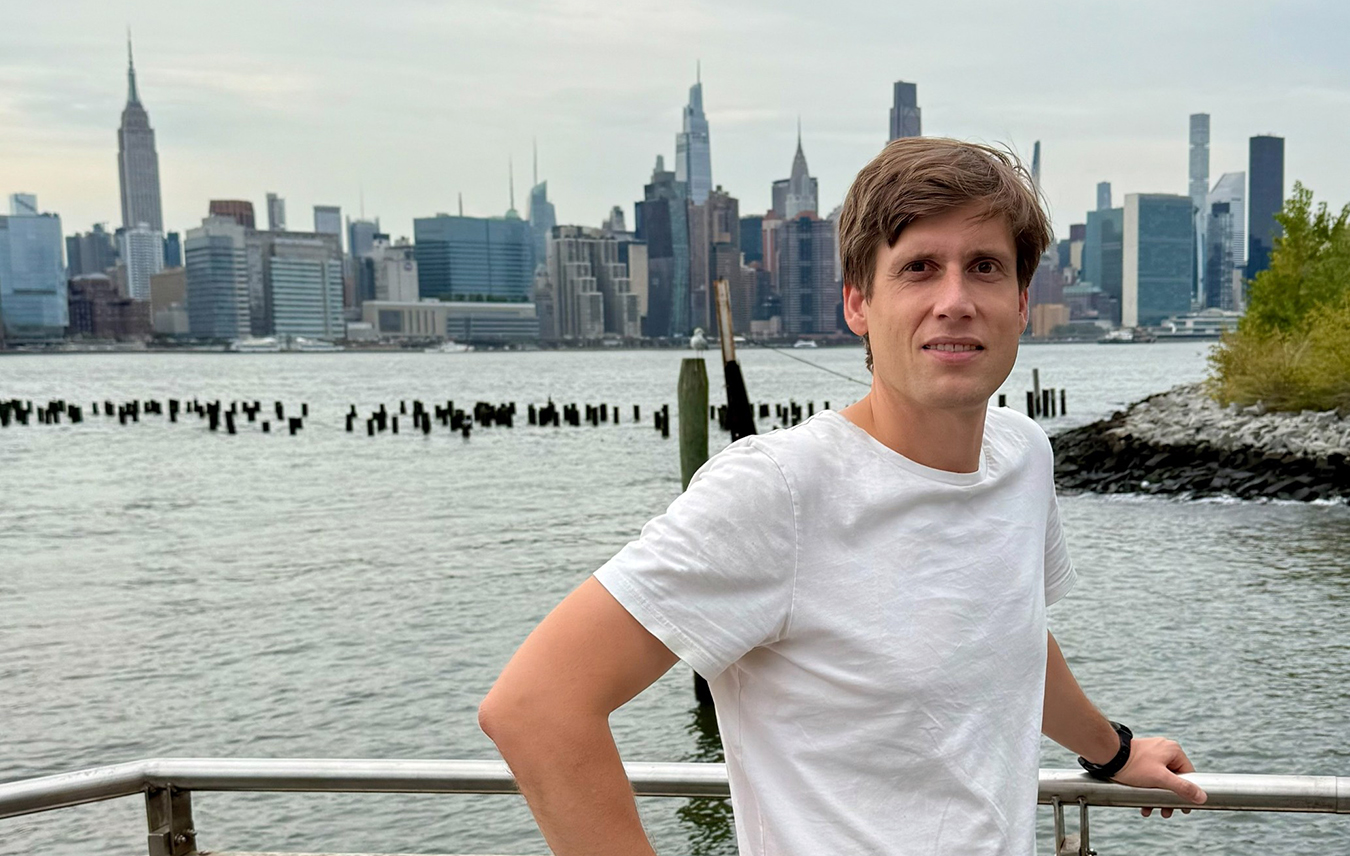
New York is a truly fascinating city, and exploring it as a family was an unforgettable experience. One moment that stands out is our first ferry ride from Wall Street to Brooklyn with our son. He was absolutely thrilled; though I am still not sure whether it was the thrill of the ferry ride, the stunning skyline, or the iconic Brooklyn Bridge that impressed him most.
8 | A different viewpoint: What makes the US – and New York in particular – an exciting country and city for a secondment in the legal sector?
New York remains the world’s foremost financial and business hub, and that makes it an extraordinary environment for legal professionals on secondment. The city is home to leading law firms that not only respond to global developments but actively shape emerging trends in finance, technology, and regulation. Few places offer such proximity to cutting-edge transactions and high-stakes decision-making. Beyond the professional opportunities, New York’s unique energy as well as its diversity, pace, and cultural vibrancy create an atmosphere where innovation thrives. It is a rare opportunity to be at the epicenter of global legal and economic change while experiencing a city unlike any other.
9 | What’s next for you – professionally and/or personally?
After returning to Berlin, I’ll take three months of paternity leave. Once done, I will join Hengeler’s Munich office for six months my domestic internal secondment. This will be an exciting opportunity to work closely with colleagues there, gain new perspectives, and deepen my experience in a different environment. After completing the [domestic internal secondment], I will return to Berlin.

