Global Insights: Secondees at Hengeler
INTERVIEW WITH KIRSTEN CAMPBELL-FERGUSON, SLAUGHTER AND MAY
1 | Please introduce yourself and describe your career path to date.
I 'm Kirsten, a trainee solicitor currently on second- ment from Slaughter and May, Hengeler's Best Friend firm in London. I was born and grew up in Worcestershire, England, and am half British, half Russian. On finishing my A-Level exams, I went onto study law at University College London (UCL), where alongside my degree I was very involved with student theatre and music societies, producing and performing in all sorts of shows. Despite spending what felt like more time on this than on my studies, I managed to graduate with First Class Honours, and had secured a job with Slaughter and May. I then went onto complete the new Solicitors' Qualifying Exam (SQE) with BPP Law School, before commencing my two year training contract with Slaughter and May. During these first two years at the firm, trainees rotate into a new department every six months, the idea being to gain experience and get a feel for different areas of legal practice and ultimately decide which practice group to qualify into on completion of the training contract. My secondment to Hengeler is the final six month "seat" in this process for me, and I have previously spent time in the Corporate, Disputes and Investigations, and Pensions, Employment and Incentives departments.
2 | How did you come to start your secondment with us? Are there any specific reasons why you chose Hengeler?
I had always been very keen on doing an international secondment, recognising that living and working abroad for a whole six months would provide an amazing opportunity to travel, experience a new culture and expand my network. Germany was top of my list, as I wanted the chance to practice my German language skills and get a real insight into a jurisdiction so different to that of the UK. It was then a stroke of luck that Germany's number one firm is part of the Best Friends Network, and I knew that if I came to Hengeler I would have the opportunity to meet and work with some of the very best lawyers in Europe.
3 | Which areas of law do you mainly focus on during your secondment?
I have been based with the Employment team in Frankfurt. In September I will be qualifying into the Pensions, Employment and Incentives practice group at Slaughter and May, and having expressed my preferences, Hengeler were very happy to accommodate me in the equivalent team here. During my secondment I have been involved in a wide range of matters, both with the Employment team and also assisting other teams with M&A transactions and contentious work. The highlight so far has been working with Hengeler lawyers in Berlin to carry out a workplace investigation at a major company, which gave me invaluable experience in conducting witness interviews and writing up an investigation report.
4 | What are the most significant differences between the British and the German legal system?
In my opinion, the most significant difference between the English and German legal systems lies in their fundamental structure. The UK follows a common law system, which places great weight on judicial precedent, that is, decisions made by courts are binding and form an essential part of the law.
We do not have a formal, codified constitution, rather, an "unwritten" one which comprises a blend of these judicial decisions, Parliamentary legislation and long established conventions. In contrast, Germany follows a codified civil law system, and judicial decisions do not carry the same binding authority beyond the individual case. In practice this often means that when my colleagues ask, "what does UK law say on this point?", the answer is not black and white. The difference I have discussed most with my colleagues is how structured and formalised legal training is in Germany, compared to that in the UK. The British system, whilst also rigorous, offers quite a bit of flexibility and specialisation earlier on (e.g., solicitor vs. barrister routes), whereas the path to becoming a fully qualified German lawyer involves two state exams and mandatory periods of practical training across different legal sectors, including courts and administration. My German colleagues were surprised (and somewhat outraged) that one can become a fully qualified UK solicitor aged 24!
5 | How does the work at Hengeler differ from your home law firm?
By and large, I think the nature of the work at Hengeler is similar to that of Slaughter and May. Both firms have very strong Corporate, Disputes, and Competition practice areas, and broadly similar specialist groups who support on transactions and provide specialist advice to clients. The Employment group at Slaughter and May is bigger than Hengeler's numbers-wise, but nonetheless a very close-knit and friendly team. I found the culture at Hengeler to be similar to that at Slaughter and May, and my new colleagues made me feel very welcome from day one. We go out for lunch together most days of the week, which has brought us closer as colleagues and friends, and also given me a chance to test out different food spots in the city.
6 | What did you take away from the secondment, professionally and personally?
This secondment has been one of the most formative experiences of my career so far. Professionally, it has strengthened my confidence in making decisions regarding what information and suggestions are most useful from a client's perspective, having often been trusted to advise on points of English law. That shift has been empowering and something I’ll carry with me as I transition into my role as a qualified solicitor. Personally, I have learned a huge amount about my own adaptability and how to build a support network from scratch. Moving to a new city and country where I did not know anyone pushed me out of my comfort zone in the best way, and it has been rewarding to make genuine friendships here, through work, tennis, and through friends of friends. It has also been amazing to be able to practice my German every single day – true to the old adage, it hasn’t gotten easier, but it has gotten better!
7 | What was your most memorable or unique moment during your time here?
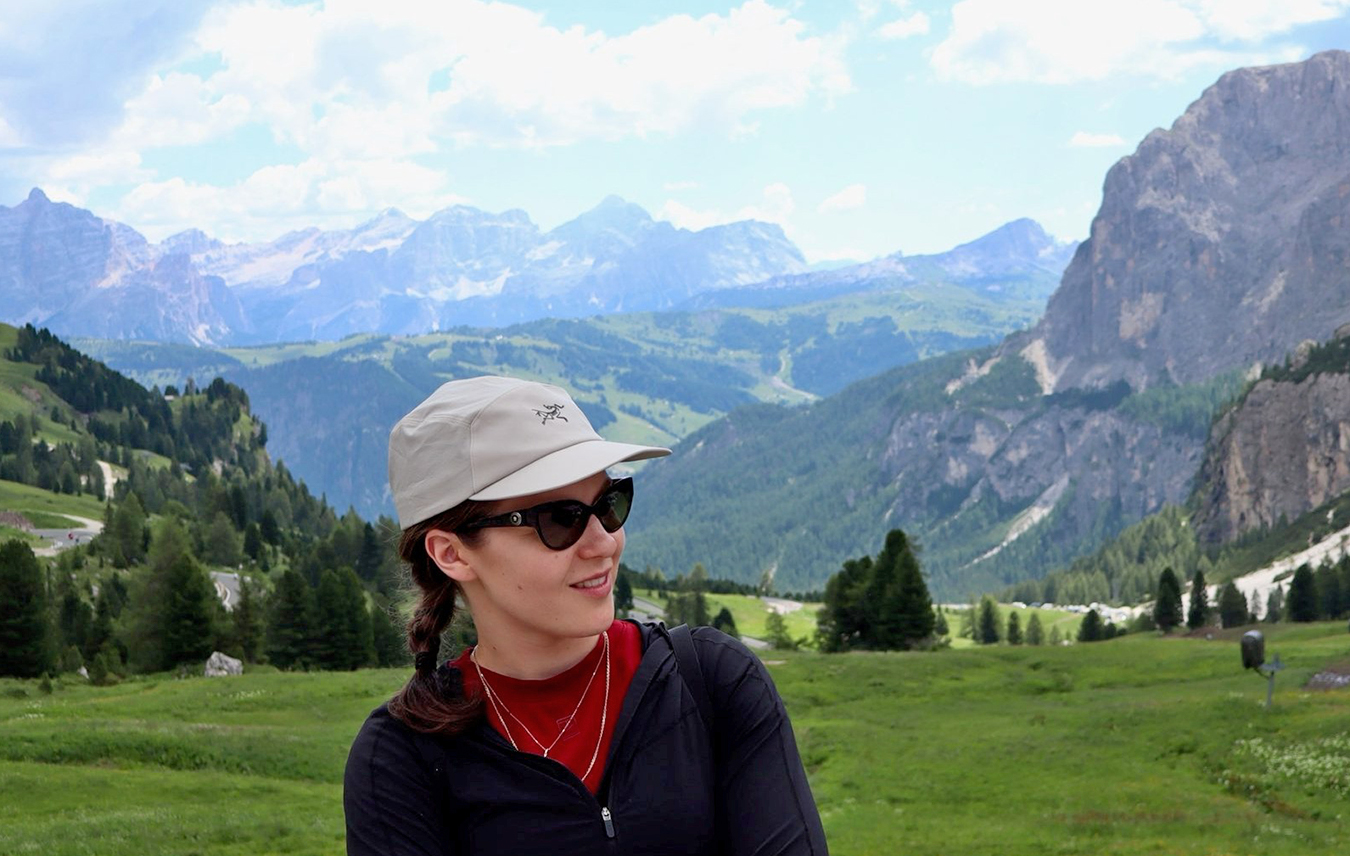
A real highlight was attending Hengeler's Germany wide Frühlingstreffen event, which involved all colleagues from the Frankfurt, Berlin, Munich and Düsseldorf offices coming together in Munich for a big black-tie dinner and party! So much fun, and a fabulous occasion on which to meet Hengeler lawyers from other offices and departments. Outside of work I have been playing in a tennis team, through which I have made great friends (and gotten to play on proper European red clay, which we unfortunately don’t have much of in the UK!). It has also been super easy to explore other parts of Germany, like Berlin, the Bavarian Alps and Heidelberg, as well as to hop on a direct train to Paris for the weekend! My absolute favourite place to go in Frankfurt is Café im Liebighaus, which I have found to be a perfect little oasis to sit and read in the sun with a coffee.
8 | A different viewpoint: What makes the UK exciting for a secondment in the legal sector?
I think London is the best city in the world for a multitude of reasons, but I will put any bias aside to answer this one! Going to London on secondment puts you right in the centre of the action and at the heart of one of the world's most robust legal systems and financial hubs. Many global corporations and clients are headquartered in London, and both companies and individuals come from all over the world to conduct their business in English courts. So, whether you are a corporate or a contentious lawyer, it is very much the place to be. It would not only be a great opportunity to gain an understanding of UK law, but also experience in practice the way UK lawyers build relationships, handle negotiation, and adhere to their own British legal culture and traditions. Overall, I have found the working culture in the UK legal sector to be an open and collaborative one, and there is a real drive among lawyers to work together to keep London at the cutting edge and forefront of the legal world. Outside of work, London is the most exciting place to be living, with every possible activity, theatre show, top restaurant, club, cafe, museum, gallery, shop, historic park, and more, right on your doorstep. I would also recommend exploring other places around the UK, such as Bath, York, Snowdonia, and Cornwall, just to name a few, which are usually accessible by train from London. All in all, I think London would be a fantastic place to do a secondment. And don't worry, the weather is not as bad as some will have you believe!
9 | What’s next for you – professionally and personally?
After leaving Frankfurt I will have a few weeks of leave before I qualify as a solicitor and begin my new role. In that time, I am going travelling in Central Asia: first trekking across Kyrgyzstan, then onto the stunning Silk Road sites of Uzbekistan. I am also hoping to play lots of tennis and spend time with my friends in London, as I have certainly missed the city and the people over the last six months! I feel very grateful to be joining an incredibly welcoming and talented team at Slaughter and May and I am looking forward to everything that lies ahead.